Every August, millions of Florida homeowners open their TRIM notice and wonder if their property assessment is fair. With effective tax rates varying widely by county, even a small overvaluation can cost you. If yours seems too high, you have the right to challenge it — and the process is more straightforward than most people think. This guide walks you through everything: evaluating your case, gathering evidence, navigating informal meetings and formal VAB hearings, and deciding whether to go DIY or hire a professional.
Should You Appeal Your Property Tax?
- Save hundreds or thousands by appealing overvalued assessments
- Only 25 days after TRIM notice to file appeal
- 3-5 comparable properties are key to success
- Start with informal meeting before formal petition
- DIY appeals succeed ~35% of the time; with professional help, 50-60%
- Property Exemption can do all of it for you, free
You just opened your TRIM notice and your property taxes jumped. Your first reaction might be anger, but the real question is: do you have a legitimate case for appeal? Not every tax increase is worth fighting, but when you do have grounds, the savings can be substantial.
Before diving into the appeals process, let's determine if your situation warrants the time and effort. A successful appeal requires evidence that your property is assessed higher than its actual market value. Here's how to quickly evaluate your case.
Understanding Your TRIM Notice
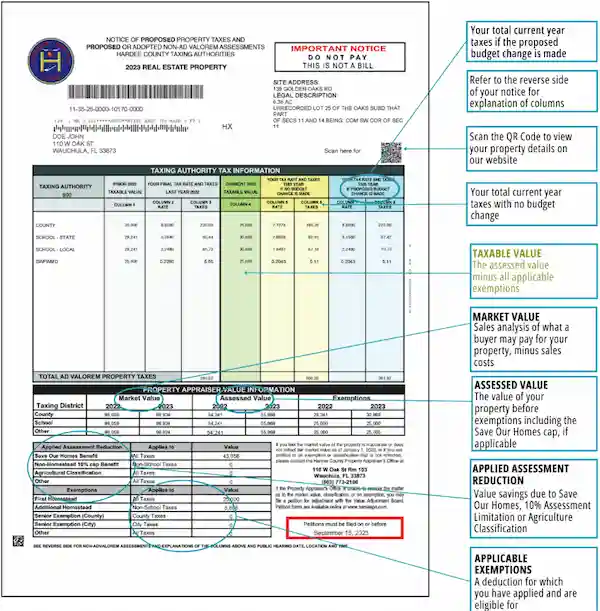
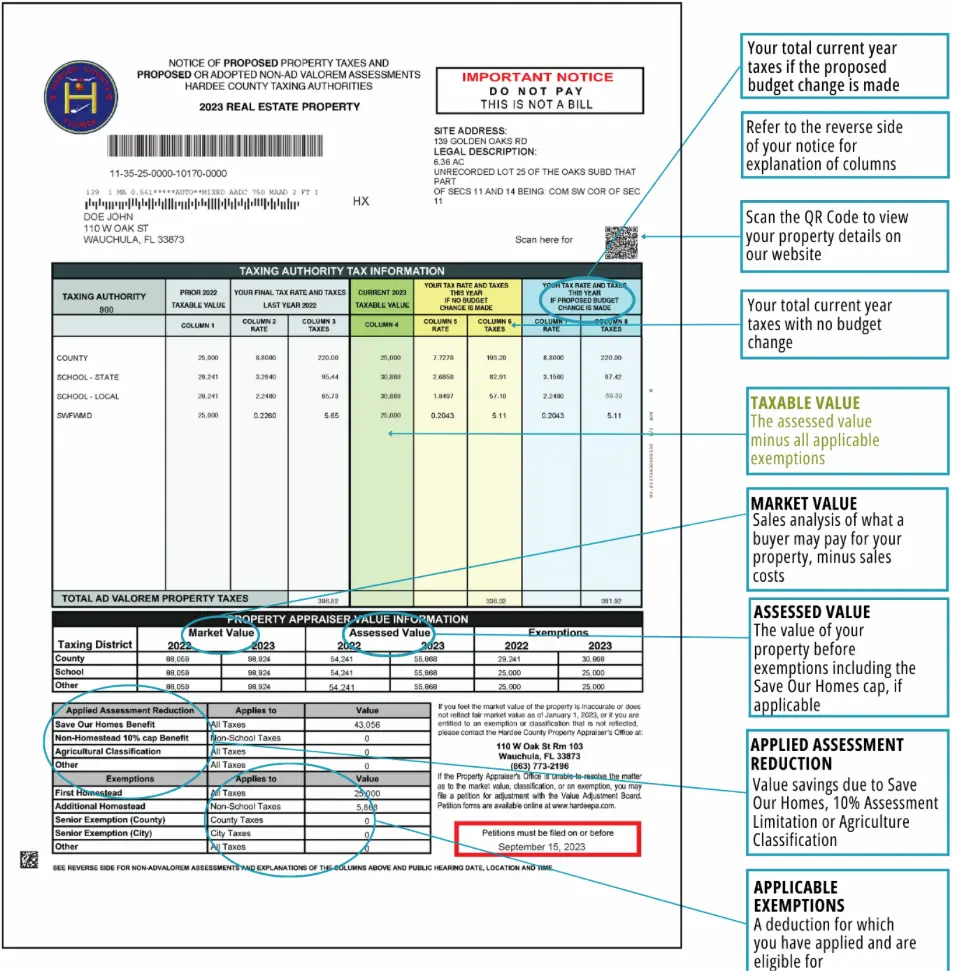
Every August, Florida property owners receive a Truth in Millage (TRIM) notice. This isn't your tax bill -- it's a proposal showing what your taxes could be. The TRIM notice contains critical information for evaluating whether an appeal makes sense.
Market Value
The county's estimate of your property's worth as of January 1st
Property Description
Square footage, bedrooms, bathrooms, and features listed
Exemptions Applied
Homestead, senior, veteran, and other tax breaks claimed
Appeal Deadline
Exactly 25 days from the mailing date to file a petition
Critical deadline: You have only 25 days from the TRIM notice mailing date (not when you receive it) to file an appeal. This deadline is strictly enforced -- missing it means waiting until next year. The exact deadline date is printed on your TRIM notice.
Do You Have a Strong Case?
Answer these questions honestly to gauge whether an appeal is worth your time:
- Your property has obvious errors (wrong square footage, missing damage)
- You can find 3+ similar homes that sold for significantly less nearby
- Your property has issues affecting value (flooding, structural problems)
- Your market value seems high compared to what you could realistically sell for
- Your taxes only increased slightly (under 10%)
- You recently bought at or above your current assessed value
- You can't find comparable sales to support your argument
- You're in a rapidly appreciating market area
The Reality About Property Tax Appeals
Property tax appeals aren't magic bullets for lowering taxes. They work when you have legitimate evidence that your property is overvalued. The process requires research, preparation, and often attending a hearing. Most importantly, you need comparable sales data or clear assessment errors to build a convincing case.
The good news: if you do have a strong case, the potential savings make the effort worthwhile. Florida homeowners with well-prepared appeals often save hundreds or thousands annually — and if you have homestead, the Save Our Homes cap means a lower starting assessment benefits you for years. Your assessment also cannot be increased as a result of appealing, so there's minimal downside risk.
If your situation shows strong appeal indicators, the next sections will walk you through building your evidence case, understanding the appeal process, and presenting your argument effectively. We'll cover finding comparable properties, meeting with property appraisers, and navigating VAB hearings.
If you're on the fence, try our free property analysis tool -- it might reveal missed exemptions or assessment issues you hadn't noticed.
Selling or moving? Your biggest tax benefit is on the line.
Most Florida homeowners have tens of thousands of dollars in Save Our Homes protection — and lose it by accident when they move. Check what yours is worth and what happens to it if you sell.
Building Your Evidence Case
The most convincing evidence in a property tax appeal is data on comparable properties (comps) that sold for less than your TRIM Notice Market Value. Without strong comparable sales data, even legitimate concerns about your assessment are difficult to prove to a Value Adjustment Board magistrate.
Building a winning case requires systematic research and organization. You'll need to find recent sales of similar properties, document any issues affecting your property's value, and present everything in a clear, compelling format. Bankrate's guide to winning appeals echoes this — preparation is the single biggest factor. Here's exactly how to do it.
Finding Comparable Properties
Evidence in a property tax appeal really needs to show data on comparable properties (comps) that sold for less than your Market Value at or around 1st January. Here's how to find strong comps in your area:
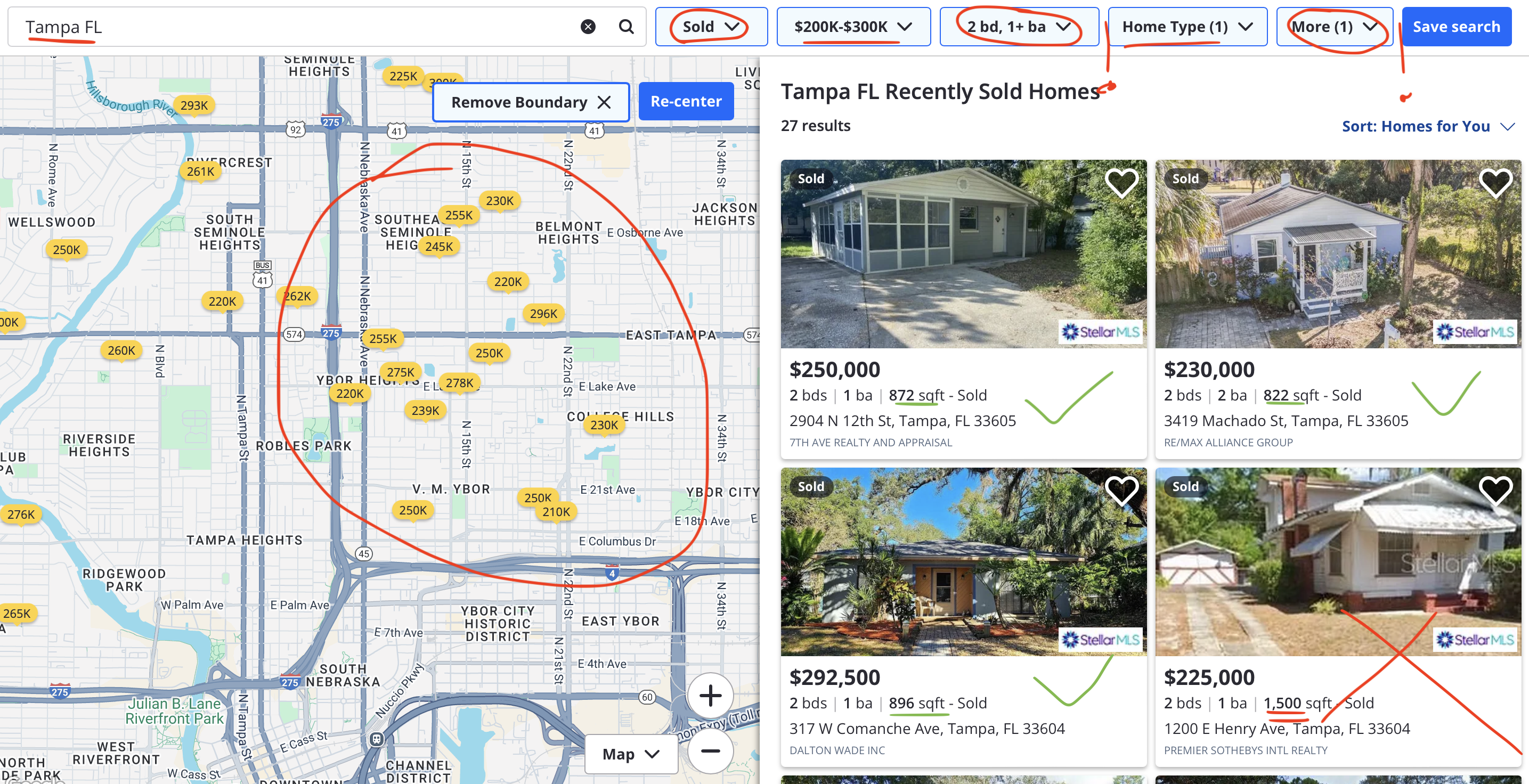
Step 1: Search Your County Property Appraiser's Website or Zillow
Every Florida county has a property appraiser's website with searchable property records. For example, in Miami-Dade, you'd visit the Miami-Dade Property Appraiser's website. Or if easier use Zillow in your area. Look for:
- Properties in your neighborhood or within 1/2 mile
- Similar size (within 20% of your square footage)
- Similar age and construction
- Sales that occurred within the past year
Step 2: Create a Comparison Spreadsheet
Create a simple spreadsheet comparing:
- Address and sale date
- Sale price
- Square footage
- Price per square foot
- Features (bedrooms, bathrooms, pool, etc.)
- Property appraiser's assessment of each property
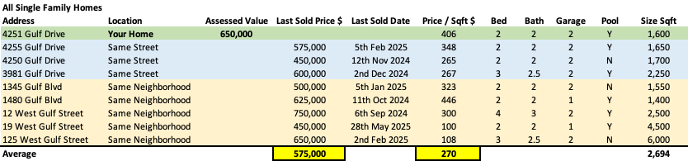
Focus on finding properties with a lower price per square foot than what the appraiser used for your home. In Florida's diverse real estate market, neighborhoods just a few blocks apart can have dramatically different values. In Miami-Dade County, for instance, a property in Coral Gables should only be compared to other Coral Gables properties, not those in adjacent areas.
Documenting Property Issues
Beyond comparable sales, you'll want to document any issues that affect your property's value. Florida's unique climate and weather patterns create specific challenges that should be reflected in your assessment.
Effective Photography
- Take clear, well-lit photos of damage
- Include reference objects for scale
- Document before/after storm damage
- Show structural issues clearly
Repair Documentation
- Get written estimates from contractors
- Document code violations or permits needed
- Include environmental impact assessments
- Note accessibility or utility issues
Organizing Your Evidence
A well-organized evidence package makes the difference between a convincing presentation and a confusing one. Here's how to structure your appeal for maximum impact:
- TRIM notice copy
- Comparable properties spreadsheet
- Property record cards for each comp
- Property photos showing issues
- Repair estimates (if applicable)
- Recent appraisal (if available)
- Neighborhood map showing comp locations
- Summary of key arguments (1 page)
Assess Your Evidence Strength
Before moving forward, honestly evaluate your evidence. Strong cases have multiple types of supporting data and clear, documented proof of overvaluation.
Strong Case
- 3+ comparable sales below your assessment
- Clear property defects or damage
- Assessment errors you can prove
- Recent appraisal supporting lower value
Moderate Case
- 1-2 comparable sales below assessment
- Some property issues affecting value
- Assessment seems high but not extreme
- Mixed evidence supporting your position
Weak Case
- No comparable sales supporting lower value
- Assessment appears market-appropriate
- Only minor or cosmetic issues
- Recent purchase at similar value
The Two-Track Appeal Process
Florida offers two ways to challenge your property assessment: an informal conversation with your property appraiser and a formal appeal to the Value Adjustment Board. Smart homeowners always start with the informal route first -- it's free, faster, and often resolves the issue without further action needed.
Think of this as a two-step process where you escalate only if necessary. The informal meeting costs nothing and gives you valuable insight into the appraiser's reasoning. If that doesn't work, you can proceed to the formal VAB petition with better understanding of their position.
Florida's property tax appeal process is governed by Florida Statute 194.032, which establishes your right to challenge property assessments and the procedures for doing so.
Step 1: Informal Conversation with Property Appraiser
Before filing any formal paperwork, schedule a meeting with your county's property appraiser's office. This informal conversation is your best opportunity for a quick resolution and costs absolutely nothing.
How to Schedule Your Meeting
Call your county property appraiser's office directly or visit in person. You can find contact information for all Florida property appraisers on the Florida Department of Revenue website. Most counties have designated staff specifically for these meetings. You don't need an appointment in some counties, while others prefer scheduled meetings. Here's what to do:
- Call the main number and ask to speak with someone about your assessment
- Explain that you'd like to discuss your property's valuation informally
- Bring your TRIM notice and any evidence you've gathered
- Ask questions about how they arrived at your assessment
- TRIM notice and photo ID
- Property deed (if available)
- Comparable properties spreadsheet
- Photos of property issues
- Repair estimates
- Recent appraisal (if you have one)
What to Expect During the Meeting
The property appraiser's representative will review your concerns and may pull up your property record on their computer. They can show you how they calculated your assessment and what comparable properties they used. This is your chance to:
- Point out any factual errors in your property description
- Present your comparable sales data
- Show photos of damage or issues affecting value
- Ask about their methodology and comparable properties
- Immediate adjustment: They agree and reduce your assessment on the spot
- Partial adjustment: They make some changes but not as much as you requested
- No change: They maintain their assessment is correct
- Request for more time: They want to research your evidence further
Step 2: Formal VAB Appeal
If the informal meeting doesn't resolve your concerns, you can file a formal petition with your county's Value Adjustment Board (VAB). This triggers a more formal process with specific deadlines and procedures.
Filing Your VAB Petition
You must file your petition within 25 days of the TRIM notice mailing date using Form DR-486 from the Florida Department of Revenue (we also have a downloadable forms page with all the key documents). The filing fee is $15 in most Florida counties. You'll need to complete Form DR-486, which asks for basic information about your property and the grounds for your appeal.
Online Filing
Most counties offer online submission through their Clerk of Court website
In Person
Visit the Clerk of the Circuit Court office in your county
By Mail
Mail completed form and fee to address on your TRIM notice
What Happens After Filing
Once you file your petition, you'll receive confirmation and eventually a hearing notice. The hearing will typically be scheduled 2-3 months later, between October and February. You'll have about 15-30 minutes to present your case to a special magistrate.
Typical VAB Timeline
- File Petition -- within 25 days of TRIM notice, $15 filing fee
- Receive Hearing Notice -- mailed 2-3 months after filing with date, time, location
- Attend Hearing -- present your case to special magistrate, 15-30 minutes
- Receive Decision -- mailed within 20 days of hearing
Key Differences Between Informal and Formal Appeals
| Aspect | Informal Meeting | Formal VAB Appeal |
|---|---|---|
| Cost | Free | $15 filing fee |
| Timeline | Can be done immediately | 2-3 months to hearing |
| Formality | Casual conversation | Formal hearing with magistrate |
| Decision Maker | Property appraiser staff | Independent special magistrate |
| Evidence Required | Same evidence works for both | More formal presentation |
Always start with the informal meeting, even if you're confident you'll need to file a formal appeal. The informal conversation gives you valuable insight into the appraiser's reasoning and may resolve your issue immediately.
Remember: you can still file a formal petition even after the informal meeting doesn't go your way, as long as you're within the 25-day deadline from your TRIM notice mailing date.
Your VAB Hearing Guide
Your Value Adjustment Board hearing is your opportunity to present your case to an independent special magistrate. These hearings are professional but not intimidating -- think of it as a structured conversation where you present evidence and answer questions about your property's value.
Most VAB hearings last 15-30 minutes and follow a predictable format. You'll present your case first, the property appraiser responds, and the magistrate may ask questions. Preparation and organization are key to making your time count. Remember your property taxes pay for the VAB Process, so you have every right to present your case!
What to Expect at Your VAB Hearing
VAB hearings are conducted by special magistrates -- typically licensed real estate appraisers or attorneys with property valuation experience. According to Florida Statute Chapter 194, these magistrates are appointed to hear evidence and make recommendations on property valuations. For a good overview of what to expect, Broward County's VAB FAQ page is one of the clearest county guides available.
Hearing Format and Atmosphere
The hearing room is typically a conference room or small courtroom with a table for you, a table for the property appraiser's representative, and a desk for the magistrate. It's professional but not formal like a courtroom trial. You'll be sworn in before presenting your case.
- Opening & Oath -- Magistrate explains process, you're sworn in (2 minutes)
- Your Presentation -- Present your evidence and arguments (5-10 minutes)
- Property Appraiser Response -- Appraiser defends their assessment (5-10 minutes)
- Questions & Rebuttal -- Magistrate asks questions, you may respond (5-10 minutes)
- Closing -- Hearing ends, decision mailed within 20 days
How to Structure Your Presentation
A well-organized presentation makes a strong impression. Lead with your strongest evidence and keep everything factual and professional. Here's a proven structure that works:
Effective Presentation Structure
- State your name and property address
- Briefly explain why you're appealing
- Present strongest evidence first (comparable sales)
- Show supporting evidence (photos, estimates)
- Summarize your requested assessment
- Answer questions respectfully
Common Presentation Mistakes
- Getting emotional or arguing with magistrate
- Bringing up irrelevant personal financial issues
- Poor organization of documents and evidence
- Talking too long without making clear points
- Criticizing the property appraiser personally
- Failing to directly answer magistrate's questions
"Good morning. My name is [Your Name] and I own the property at [Address]. I'm here because I believe my property's assessed value of $[Amount] is higher than its actual market value. I have comparable sales data showing similar properties in my neighborhood sold for significantly less, and I'd like to present this evidence for your consideration."
Handling Questions from the Magistrate
Magistrates typically ask questions to clarify your evidence and understand your reasoning. They're not trying to trip you up -- they want to make an informed decision. Here are common questions and how to handle them effectively:
"Why do you think these properties are comparable to yours?"
Good Answer: "These three properties are within half a mile of mine, built within five years of my home's construction date, and have similar square footage and features. Here's the comparison chart showing the details."
"How did you determine your requested value?"
Good Answer: "Based on the average price per square foot of the comparable sales ($X per sq ft), my property should be valued at approximately $[Amount]. This is $[Difference] less than the current assessment."
"Do you have any recent appraisals?"
Good Answer: Either "Yes, here's an appraisal from [Date] showing a value of $[Amount]" or "No, but I have these comparable sales that occurred after the January 1st assessment date."

What the Property Appraiser Will Argue
The property appraiser's representative will defend their assessment using their own evidence and methodology. Understanding their likely arguments helps you prepare effective responses. Appraisers follow standards set by the International Association of Assessing Officers (IAAO), and you can also review methodology details at the Florida Department of Revenue Property Tax Division.
Typical Appraiser Arguments
- Their comparable sales support the current assessment
- Your comparables aren't truly similar to your property
- Assessment reflects January 1st value, not current market
- Property improvements or features justify higher value
- Overall neighborhood values support their assessment
How to Respond Effectively
- Point out specific differences in their comparables
- Explain why your comparables are more similar
- Acknowledge the January 1st date but show market trends
- Provide documentation of property condition issues
- Stay focused on factual differences, not opinions
Complete Hearing Preparation Checklist
- Organize evidence in presentation order
- Make 3 copies of all documents
- Practice 5-minute presentation out loud
- Confirm hearing location and time
- Prepare opening statement
- Plan route and parking
- Bring photo ID and hearing notice
- Review magistrate's likely questions
"The most successful appeals I see are from homeowners who come prepared with organized, relevant evidence and can clearly explain why their property is worth less than assessed. They stick to facts, answer questions directly, and don't take up extra time with irrelevant information. It's not about being a perfect presenter -- it's about having solid evidence and presenting it clearly."
-- Former VAB Special Magistrate, Orange County
After Your Hearing
The magistrate will mail their decision within 20 days of your hearing. The decision will either uphold the current assessment, reduce it to your requested amount, or set it somewhere in between. You can find more information about the appeals process on each county's appraiser website, for example the Miami-Dade guide.
If You Win
- Assessment is reduced
- Tax bill adjusted
- Refund issued if taxes paid
- Future bills reflect new value
Partial Win
- Some reduction granted
- May still save hundreds annually
- Consider if further appeal worthwhile
- Better position for next year
If You Lose
- Assessment stays the same
- Can appeal to circuit court (costly)
- Learn from experience for next year
- No penalty for appealing
Professional Help
Calculate Your Tax Overpayment
See exactly how much an overvalued assessment costs you over time. Even a small overvaluation compounds into significant overpayments when you factor in your county's millage rate and annual property appreciation.
Property Tax Overpayment Calculator
Degree of Overvaluation by Property Appraiser
DIY vs. Professional Help: Making the Right Choice
Many Florida homeowners successfully handle their own property tax appeals, especially for residential properties with straightforward issues. Before hiring anyone, also check whether you qualify for senior exemptions or other tax breaks you might be missing — sometimes the easiest savings don't require an appeal at all. For cases that do need one, here's how to decide whether to go DIY or hire help.
Good Candidates for DIY Appeals
- Clear factual errors in property description
- Strong comparable sales data readily available
- Residential properties under $500,000
- Obvious property damage or issues
- You have time to research and prepare
- Comfortable presenting to a magistrate
Consider Professional Help For
- Commercial or investment properties
- High-value residential properties ($750,000+)
- Complex valuation issues
- Previous unsuccessful DIY attempts
- Limited time or uncomfortable with process
- Multiple properties to appeal
Professional Representation Options
Property Tax Consultants
Typical Fee: 50-60% of first year savings
Best For: Residential properties
Advantage: No upfront cost, pay only if you win
Most consultants work on contingency and specialize in property tax appeals. They handle the entire process and have experience with local VAB procedures.
Property Tax Attorneys
Typical Fee: Hourly ($200-$500) or contingency
Best For: Complex cases, circuit court appeals
Advantage: Legal expertise for complicated issues
Attorneys provide legal representation and are essential for circuit court appeals. Most cost-effective for high-value or legally complex cases.
How to Choose the Right Professional
If you decide to hire professional help, ask the right questions to ensure you're working with someone qualified and experienced. Here's what to look for:
Experience & Qualifications
- How many Florida property tax appeals have you handled?
- What's your success rate in my county?
- Are you licensed/certified in property tax work?
- Do you specialize in residential properties?
Process & Fees
- What is your exact fee structure?
- What happens if we don't win?
- How do you handle the entire process?
- Will you represent me at the VAB hearing?
Selling or moving? Your biggest tax benefit is on the line.
Most Florida homeowners have tens of thousands of dollars in Save Our Homes protection — and lose it by accident when they move. Check what yours is worth and what happens to it if you sell.
Frequently Asked Questions
Here are the most common questions Florida homeowners ask about property tax appeals, with honest, straightforward answers based on real experiences.
Every situation is unique. We're here to help with personalized guidance.
(929) 433-6766 • customer@propertyexemption.com
Serving all Florida counties including Miami-Dade, Broward, Orange, Hillsborough, Pinellas, Palm Beach, Duval, and beyond
Share this guide
