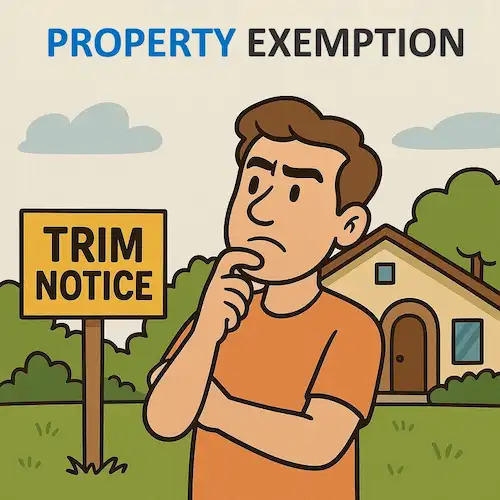
What is a TRIM Notice and Why It Matters
A TRIM notice (Truth in Millage) is your annual property tax assessment notice that arrives each August. It's essentially a preview of your upcoming property tax bill and shows exactly how your taxes are calculated. Florida law requires property appraisers to mail these notices at least 25 days before public budget hearings.
Understanding your TRIM notice is crucial because it's your opportunity to verify your property information, discover missing exemptions that could save you hundreds or thousands of dollars, and decide whether to appeal your assessment. Check if you're missing exemptions with our free calculator.
Check your Property Exemptions and Benefits
Find out exactly how much you can legally save in 2 mins
Free • No obligation • Takes 2 minutes
How to Read Your TRIM Notice: 7 Critical Sections
Your TRIM notice contains seven key sections that determine your property tax bill. Let's break down each section so you can spot potential savings and errors.
1 Verify Your Property Owner Information
The first section shows your name, mailing address, and property address. This might seem basic, but errors here can cost you money and create legal issues.
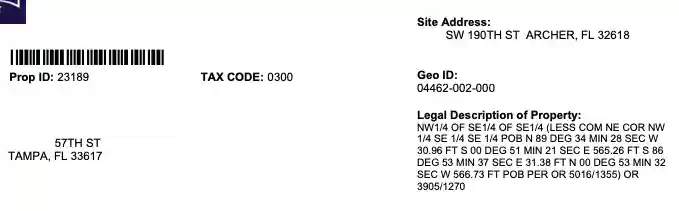
Sample TRIM Notice showing property owner information section
Common Issues to Check:
- • Deceased spouse still listed as owner
- • Missing spouse who should be on the deed
- • Incorrect mailing address (you'll miss important notices)
- • Misspelled names that don't match your deed
If you need to add your spouse to the deed for maximum exemptions, consider an enhanced life estate deed. For recently married couples, learn how to add your spouse to the deed. If you're divorced or widowed, you may need to remove a spouse from the deed.
Action Item: Contact your property appraiser's office immediately if any information is incorrect. Deed changes may require legal assistance.
2 Understanding Millage Rates: What You're Actually Paying
Millage rates are how your tax is calculated. One mill equals $1 of tax for every $1,000 of taxable value, as explained in the Florida Department of Revenue's millage guide. Your TRIM notice shows separate rates for county, city, school district, and special districts.
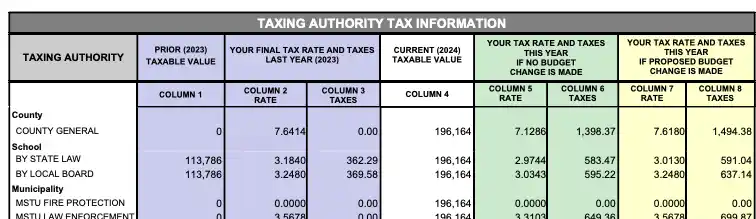
Sample TRIM Notice showing millage rates breakdown
Typical Florida Millage Breakdown:
- • School District: 6-8 mills (often the largest portion)
- • County: 4-6 mills
- • City: 2-4 mills (if you live in a city)
- • Special Districts: 0.5-2 mills (fire, water, etc.)
Important: School taxes are calculated on your full assessed value because most exemptions don't apply to school millage. This is why school taxes often represent 40-50% of your total bill, even though recent legislative efforts aim to reduce this burden.
Your Rights: You can attend public hearings to challenge proposed millage rate increases. Dates and times are listed on your TRIM notice.
3 How Your Property's Market Value is Determined
Your property's market value is assessed as of January 1st each year. Property appraisers use comparable sales, replacement cost, and income approaches to determine what your property would sell for in the current market.
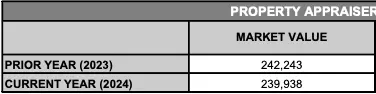
Sample TRIM Notice showing market value assessment
Assessment Methods:
- • Sales Comparison: Recent sales of similar nearby properties
- • Cost Approach: Replacement cost minus depreciation
- • Income Approach: For rental properties only
If your market value seems too high, you have the right to appeal. The Value Adjustment Board (VAB) process allows you to challenge your assessment, but you must file within 25 days of receiving your TRIM notice. Learn the complete appeal process here.
Time-Sensitive: You only have 25 days from the TRIM notice date to file an appeal. There's typically a $15 filing fee, waived if your property value is under $100,000.
4 Save Our Homes: Your 3% Annual Increase Cap
Save Our Homes (SOH) is Florida's constitutional protection that limits annual increases in your homestead property's assessed value to 3% or the inflation rate, whichever is lower. Originally passed in 1992 as Amendment 10, this landmark constitutional amendment creates a significant difference between market value and assessed value for longtime homeowners.

Sample TRIM Notice showing assessed value with Save Our Homes protection
How Save Our Homes Saves You Money:
Example: Your home's market value is $500,000, but you've owned it for 10 years.
Your assessed value might only be $350,000 due to the 3% cap.
Tax savings: You pay taxes on $150,000 less value!
The assessed value is what most of your taxes are calculated on (except school taxes). If you move, you can transfer some of this tax savings to a new Florida home through Save Our Homes portability—voters extended the portability window to three years in 2020. Calculate your portability savings here.
Important: Save Our Homes only applies to homestead properties. Investment properties don't receive this protection.
5 Exemptions You Have (And Ones You're Missing)
This section lists all exemptions currently applied to your property. Exemptions directly reduce your taxable value, which means immediate tax savings. Many Florida homeowners are missing exemptions they qualify for.
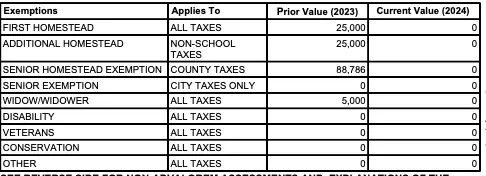
Sample TRIM Notice showing applied exemptions and tax savings
Missing Exemptions Checklist:
- • Homestead Exemption: $50,722 off assessed value (first $25k off all taxes, next $25,722 off non-school taxes)
- • Senior Exemption: Additional exemption for homeowners 65+ with income limits
- • Veteran Exemptions: Various exemptions for military service
- • Disability Exemptions: For qualifying disabilities
- • Additional Homestead: Extra exemption for seniors with income limits
If you don't see the homestead exemption listed, you're missing significant savings. You can download the official DR-501 homestead application form or learn how to apply for homestead exemption. Seniors should also check if they qualify for additional senior exemptions.
Quick Check: Use our free exemption calculator to see which exemptions you might be missing and estimate your potential savings.
6 From Taxable Value to Your Tax Bill
This is where everything comes together. Your taxable value is your assessed value minus exemptions. This final number is multiplied by the millage rates to calculate your actual tax bill.

Sample TRIM Notice showing tax calculation and total amount due
The Math:
Assessed Value: $300,000
Less: Homestead Exemption: $50,000
Taxable Value: $250,000
Millage Rate: 20 mills
Annual Tax: $5,000
Remember that school taxes are calculated differently—they use your full assessed value (minus only homestead exemption) because most other exemptions don't apply to school millage.
Payment Options: Property taxes are typically due by March 31st, but most counties offer discount for early payment (up to 4% discount if paid in November).
7 How to Challenge Your Assessment or Millage Rates
Your TRIM notice includes information about public hearings where you can challenge proposed millage rate increases. You also have the right to appeal your property's assessed value through the Value Adjustment Board (VAB) process—the Florida DOR's PT-101 guide explains the complete petition process.
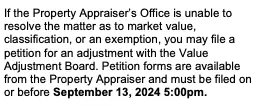
Sample TRIM Notice showing contact information and appeal deadlines
Your Two Options:
🏛️ Challenge Millage Rates
- • Attend public budget hearings
- • Speak during public comment
- • No cost to participate
- • Dates listed on TRIM notice
⚖️ Appeal Assessment
- • File VAB petition within 25 days
- • $15 filing fee (waived if value <$100k)
- • Provide comparable sales evidence
- • Consider hiring an appraiser
For detailed guidance on the appeal process, including required forms and deadlines, read our complete property tax appeal guide.
Critical Deadline: You must file your appeal within 25 days of the TRIM notice date, or you lose the right to challenge your assessment for that year.
Frequently Asked Questions
Here are the most common questions Florida homeowners have about their TRIM notices, with practical answers to help you understand your property tax assessment.
What is a TRIM notice in Florida?
+When do Florida TRIM notices get mailed?
+Can I appeal my property assessment shown on my TRIM notice?
+What is Save Our Homes on my TRIM notice?
+Why are school taxes higher than other millage rates?
+What exemptions might I be missing on my TRIM notice?
+What should I do if there's an error on my TRIM notice?
+How is my property's market value determined?
+Still Have Questions?
Don't see your question answered here? Our Florida property tax experts are here to help!
Serving all Florida counties including Miami-Dade, Broward, Orange, Hillsborough, Pinellas, Palm Beach, and Duval
Live Chat
Available Now
Usually respond within seconds
Property Exemption Team
Our team includes licensed real estate professionals and specializes in Florida property tax guidance. We analyze current regulations, interview industry professionals, and provide educational resources to help Florida homeowners understand their property taxes and find potential savings.
Official Resources & References
Authoritative sources from government agencies and property appraiser offices to support your property tax understanding.
Property Tax Resources
External links connect to official government and legal resources for additional research. Always consult qualified professionals for personalized advice about your specific tax situation.
Selling or moving? Your biggest tax benefit is on the line.
Most Florida homeowners have tens of thousands of dollars in Save Our Homes protection — and lose it by accident when they move. Check what yours is worth and what happens to it if you sell.
Check My Save Our Homes Benefit