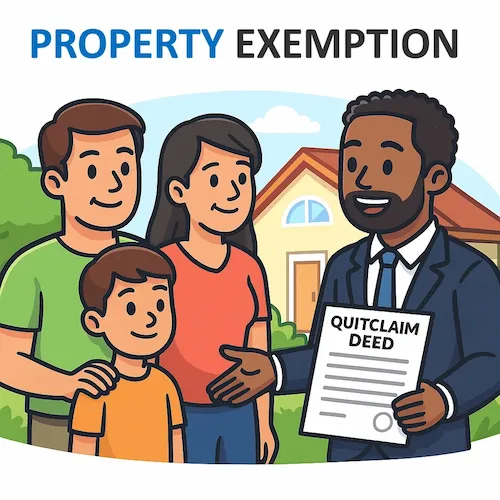
What is a Quitclaim Deed?
Imagine being able to transfer your property ownership to a family member in just a few days for under $500. That's exactly what a quitclaim deed can do – but only when used correctly. Let's explore what it really means and when it makes sense for Florida homeowners.
A quitclaim deed is a legal document that transfers whatever ownership interest you have in a property to someone else. The key word here is "whatever" – you're not promising you own the entire property, or even any of it. You're simply saying "I'm giving you whatever rights I happen to have."
In Florida, quitclaim deeds are particularly valuable because they can preserve homestead exemption benefits when transferring between qualifying family members. According to Florida Department of Revenue data, family property transfers have increased significantly in recent years, driven by estate planning needs and Florida's growing retiree population seeking to downsize their homes.
What Makes It Different
No Warranties
No promises about clear title, liens, or ownership quality.
Quick Transfer
Can be completed in days without extensive title research.
Low Cost
Typically $300-800 total cost vs. thousands for other options.
Family Friendly
Perfect for transfers between trusted family members.
✅ What a Quitclaim Deed IS
- ✓ A simple way to transfer ownership between trusted parties
- ✓ Perfect for family transfers and divorce settlements
- ✓ Legal and binding when properly executed in Florida
- ✓ Immediate ownership transfer upon recording
❌ What a Quitclaim Deed is NOT
- ✗ A guarantee that you actually own the property
- ✗ Protection against liens, debts, or title problems
- ✗ Suitable for sales to strangers or arm's-length transactions
- ✗ A way to avoid probate (use Lady Bird deeds for that)
Why Is It Called a "Quitclaim" Deed?
The name comes from old English law. When you execute this deed, you're "quitting" (giving up) any "claim" you might have to the property. You're essentially saying "I quit my claim to this property and give it to you." It's a straightforward concept that's been used for centuries to transfer property interests, and Florida law recognizes this traditional approach while adding specific requirements for validity.
How Does a Quitclaim Deed Actually Work?
Understanding how quitclaim deeds work helps you decide if they're right for your situation. The process is straightforward, but Florida has specific requirements that must be followed for the deed to be valid and enforceable.
Under Florida Statute 689.01, all real estate transfers must meet specific execution requirements. While the process is similar across all 67 counties, recording fees and processing times can vary - for example, Miami-Dade County typically processes deeds within 24-48 hours, while some rural counties may take 3-5 business days.
The Complete Process: From Start to Finish
Initial Consultation & Planning (1-2 days)
Meet with a qualified Florida real estate attorney to discuss your goals and ensure a quitclaim deed is appropriate for your situation. They'll verify the property description against county records and check for any obvious issues.
Document Preparation (1-2 days)
Attorney prepares the quitclaim deed with proper legal descriptions, identifies the grantor (you) and grantee (recipient), and includes all required legal language per state statute.
Signing & Notarization (Same day)
You sign the deed in front of a Florida notary public and two witnesses as required by state law. This makes the document legally valid and ready for recording with your county clerk.
Recording & Transfer Complete (1-3 days)
The deed is filed with the county clerk's office where the property is located. Once recorded, the ownership transfer is complete and becomes part of State public record.
What Actually Gets Transferred
This is where many Florida homeowners get confused. A quitclaim deed transfers your exact ownership interest - whether that's 100%, 50%, or even 0% of the property. Understanding this concept is crucial before proceeding with any transfer.
The "As Is" Transfer
When you sign a quitclaim deed, you transfer exactly what you own, nothing more, nothing less. Here's what that means in real Florida situations:
You Own Everything
Grantee gets 100% ownership of clear, unencumbered property
You Own Half
Grantee gets your 50% interest, other owner still owns their half
You Own Nothing
Grantee gets nothing, but you're still legally protected from future claims
Important Florida Considerations
Florida law requires that quitclaim deeds include specific language and meet execution requirements that differ from other states. The deed must be signed by the grantor, witnessed by two people, and notarized - all in the same session.
Additionally, if you're transferring homestead property, the transfer may affect your homestead exemption benefits, depending on the recipient and intended use of the property. Always verify exemption eligibility before proceeding with the transfer.
When to Use (and When NOT to Use)
This is the most important section of this guide. Quitclaim deeds are excellent in specific situations but can be disastrous when used incorrectly. Let's be completely clear about when they work and when they don't.
The key to success with quitclaim deeds is understanding that they work best when all parties know each other well, trust each other completely, and understand the property's history. When these conditions aren't met, problems arise quickly.
Perfect Situations for Quitclaim Deeds
Based on thousands of successful transfers, these situations consistently work well with quitclaim deeds. Notice the common thread: trust, knowledge, and family relationships.
👨👩👧👦 Family Property Transfers
The most common and successful use of quitclaim deeds involves family members. Whether you're adding a spouse to your title after marriage, transferring property to adult children for estate planning, or consolidating ownership among siblings who inherited property together.
Real example: The Martinez family in Orlando used a quitclaim deed when three siblings inherited their parents' home. Two siblings wanted to sell their interests to the third, who planned to live there. The process took one week and cost under $600 total.
⚖️ Court-Ordered Divorce Transfers
When divorce courts award the marital home to one spouse, quitclaim deeds are the standard method for removing a spouse from the deed. The court order provides legal protection, and both parties already know the property's condition and history.
According to Florida Courts statistics, over 85% of divorce property transfers use quitclaim deeds because they're fast, cost-effective, and courts are familiar with the process.
🔧 Cleaning Up Title Issues
Sometimes people end up on property titles due to old paperwork mistakes, name changes after marriage, or clerical errors. Quitclaim deeds provide a quick fix when ownership is clear but documentation needs updating.
NEVER Use Quitclaim Deeds For These Situations
These scenarios consistently lead to problems, lawsuits, and financial losses. If your situation matches any of these, choose a different type of deed or resolve the underlying issues first.
🚫 Selling to Unrelated Parties or Strangers
If you're selling to someone you don't know well, they need title protection that quitclaim deeds simply don't provide. Most buyers and lenders won't accept quitclaim deeds for purchases because they offer no recourse if problems arise.
Real disaster: Bob Wilson in Jacksonville bought a "great deal" house using a quitclaim deed from someone he met online. The seller didn't actually own the property. Bob lost his entire $45,000 down payment with no legal recourse.
🏛️ When Your Goal is Avoiding Probate
Quitclaim deeds transfer ownership immediately – they don't help avoid probate court. If estate planning is your goal, you need different tools that preserve your control during lifetime while ensuring smooth transfer after death.
⚠️ Properties with Known Title Problems
If there are liens, judgments, boundary disputes, or ownership questions, a quitclaim deed transfers these problems to the grantee. This creates legal and financial headaches that can last for years.
When to Get Professional Guidance
Even in "perfect" situations, consulting with a qualified real estate attorney ensures you're making the right choice and executing the deed properly. This is especially important when:
- • Property value exceeds $100,000
- • Multiple family members are involved
- • There's any existing mortgage debt
- • You're unsure about title history
- • Estate planning considerations exist
- • Tax implications are unclear
- • Previous owners had financial problems
- • The property generates rental income
Smart investment: The modest cost of professional guidance ($300-500) is insignificant compared to the potential problems that arise from improper use of quitclaim deeds.
Quitclaim Deed vs. Other Options
Quitclaim deeds aren't the only way to transfer property. Let's compare them to other popular options so you can make the best choice for your specific situation.
Complete Comparison: Quitclaim vs. Alternatives
When Other Options Might Be Better
Warranty Deed
Better when: Selling to unrelated parties, need title protection, or buyer requires warranties about property ownership.
Cost: $800-1,500 including title search and insurance.
Downside: More expensive, longer process, requires title examination.
Lady Bird Deed (Enhanced Life Estate)
Better when: You want to avoid probate but keep control during your lifetime, or plan for future transfers.
Cost: $500-1,500 for professional preparation.
Advantage: Avoids probate while preserving control – learn more about this option.
Joint Ownership with Rights of Survivorship
Better when: You want simple shared ownership and automatic transfer at death for the lowest cost.
Cost: $200-500 for deed preparation and recording.
Downside: Shared control, potential creditor exposure, difficult to change.
Homestead & Tax Impact
One of the most important considerations when using quitclaim deeds in Florida is how they affect homestead exemption and property taxes. Proper planning can save thousands of dollars annually.
🏠 Florida Homestead Benefits at Risk
Homestead Exemption
$25,000 from all taxes, plus up to $26,411 from non-school taxes (inflation-adjusted)
Save Our Homes Cap
Annual assessment increases capped at 3% or inflation, whichever is lower
WARNING: Homestead Exemption Risks
Even "simple" family quitclaim deeds can accidentally trigger homestead exemption loss in Florida, costing thousands annually. Here's what can go wrong and how to protect yourself:
Common Risks
- • Administrative removal: County automatically removes exemption during any ownership change
- • Multiple homestead violation: New owner already has exemption elsewhere
- • Residency questions: Property appraiser doubts primary residence status
- • Missed deadline: Fail to reapply by March 1st following transfer
Protection Steps
- • Verify eligibility first: Confirm new owner qualifies before transfer
- • Contact property appraiser: Notify them of planned family transfer
- • File immediately: Submit new exemption application right after recording deed
- • Monitor tax bills: Watch next year's assessment for exemption removal
Cost of Mistakes: Losing homestead exemption on a $400,000 home typically costs $2,000-4,000+ annually in higher property taxes. Professional guidance is vital before proceeding.
Common Mistakes to Avoid
These expensive mistakes cost homeowners thousands of dollars and months of stress. Learn what goes wrong and how to protect yourself from the most common pitfalls.
Under Florida Statute 689.01, quitclaim deeds must meet specific requirements. Small mistakes can invalidate transfers or create expensive legal problems years later.
The Most Expensive Mistakes
1. Not Verifying Actual Ownership
Assuming someone owns property without checking public records can cost you everything. Some people don't realize they've already sold property, have outstanding liens, or lost ownership through foreclosure. When you accept a quitclaim deed, you get whatever the grantor actually owns - which might be nothing at all.
2. Ignoring Existing Liens and Debts
Unpaid mortgages, tax liens, contractor liens, HOA dues, and court judgments all transfer with the property. In Florida, these debts "run with the land" regardless of whether you knew about them when accepting the deed.
The mortgage situation is particularly important: Most mortgages contain a "due-on-sale" clause that makes the entire loan balance immediately payable when ownership transfers.
3. Tax Consequence Blindness
Losing homestead exemption can increase property taxes by $3,000-6,000+ per year. Missing the March 1st reapplication deadline means waiting a full year for benefits to resume. Gift tax reporting may be required for below-market transfers to family members.
4. Legal Execution Errors
Florida requires specific witness signatures, proper notarization, and accurate legal descriptions. Online DIY forms often lack required state language or formatting, creating expensive problems when you try to sell or refinance later.
Essential Protection Steps
Before Transfer: Always verify current ownership through county clerk records and order a title search before accepting any deed.
Professional Help: Use only qualified Florida real estate attorneys for document preparation - never rely on online forms.
Tax Planning: Plan for homestead exemption reapplication before completing transfers.
After Transfer: Monitor property tax bills for several years to ensure exemptions remain in place.
Real Fraud Case: Wesley Chapel Quitclaim Deed Scheme
The U.S. Department of Justice recently sentenced John Alberto Stolard of Wesley Chapel to federal prison for a quitclaim deed fraud scheme that netted $827,000. The case demonstrates how criminals exploit the simplicity of quitclaim deeds to steal from people who trust them.
Stolard forged the victim's name on quitclaim deeds for five properties the victim actually owned, then filed these fraudulent deeds with the Hillsborough County Clerk of Court. Using the fake deeds as "proof" of ownership, he applied for mortgages online against properties he had stolen on paper, obtaining $827,000 in loans.
The worst part? Stolard knew the victim personally and had worked with them before. This case shows why quitclaim deeds should only be used between family members you trust completely - and why the lack of title warranties makes them dangerous in the wrong hands.
Warning Signs and Red Flags
The Florida Attorney General's office reports frequent quitclaim deed fraud targeting retirees and vulnerable homeowners. Watch for these warning signs:
Immediate Red Flags
Pressure to sign quickly - Legitimate transfers don't require immediate action. Requests for money - You shouldn't pay to receive property. Unknown property history - If you don't know the ownership background, get professional help. Complex family disputes - Multiple heirs or ongoing conflicts make quitclaim deeds risky.
Situations Requiring Professional Help
High-value properties - Anything over $100,000 warrants attorney involvement. Existing mortgage debt - Loan implications need professional review. Commercial or investment use - Business properties require warranties. Estate planning goals - Tax and probate implications are complex.
Remember that once a fraudulent quitclaim deed is recorded, recovering your property can take years of expensive litigation - if it's possible at all. Take time to verify everything before proceeding.
The Bottom Line
Attorney fees of $500-800 are minimal compared to $10,000-50,000+ losses from quitclaim deed mistakes, tax penalties, or fraud. When in doubt, always get professional guidance before proceeding.
Legal Requirements & Process
Florida law under Statute 689.01 has specific requirements for quitclaim deeds to be valid and enforceable. Understanding these requirements ensures your transfer is legally sound and properly recorded.
Florida Statutory Requirements
📋 Document Requirements
-
✓
Written Document: Must be in writing with proper legal languageVerbal agreements are never enforceable for real estate transfers
-
✓
Legal Description: Accurate property description matching county recordsMust reference official plat, survey, or metes and bounds
-
✓
Party Identification: Full legal names and current addressesNames must match exactly as shown on current deed and ID
-
✓
Consideration Statement: Typically includes nominal considerationNot legally required but commonly included ($10 for family transfers)
✍️ Execution Requirements
-
✓
Grantor Signature: Property owner must sign voluntarilyMust be mentally competent and not under duress
-
✓
Two Witnesses: Required by Florida Statute 689.01Must be competent adults who are not parties to the deed
-
✓
Notary Acknowledgment: Must be notarized by Florida notary publicNotary verifies grantor's identity and voluntary execution
-
✓
Recording: File with clerk in county where property is locatedCreates public notice and establishes priority
Complete Step-by-Step Process
Initial Consultation & Planning (1-3 days)
Meet with a qualified Florida real estate attorney to verify this is the appropriate deed type and discuss potential tax implications.
Document Preparation (1-2 days)
Attorney prepares the quitclaim deed using the exact legal description from county records and required Florida statutory language.
Execution Ceremony (Same day)
Grantor signs the deed in the physical presence of two witnesses and a notary public - all must be present simultaneously.
Recording & Fee Payment (1-3 days)
File the executed deed with the county clerk's office and pay all required recording fees and transfer taxes.
Transfer Complete & Follow-up
Once recorded, ownership transfer is legally complete. New owner should take immediate action on insurance and tax exemptions.
Required Documents Checklist
📁 For the Grantor (Property Owner)
- □ Valid government-issued photo ID (driver's license or passport)
- □ Current recorded deed showing ownership
- □ Most recent property tax statement
- □ Mortgage or lien information (if any)
- □ Property survey or legal description (if available)
📋 For the Execution Process
- □ Grantee's complete legal name and current address
- □ Two competent adult witnesses with identification
- □ Florida notary public (cannot be family member)
- □ Payment for recording fees and documentary stamps
- □ Attorney review and preparation (strongly recommended)
After You File the Quitclaim Deed in Florida
Filing the quitclaim deed isn't the end of the process. There are important steps to take immediately after recording to protect your interests and ensure everything is properly handled.
Many Florida homeowners overlook critical post-filing requirements that can cost thousands in lost tax benefits or leave them exposed to liability. Following this checklist ensures your transfer is properly completed and protected.
Immediate Steps After Recording
Within 48 Hours
The first 48 hours after recording are crucial for protecting both parties. New property owners should immediately update homeowner's insurance to reflect the ownership change, obtain certified copies of the recorded deed from the county clerk ($2-5 each), and secure the property by changing locks if moving in.
Former owners must cancel homeowner's insurance on the transferred property to avoid unnecessary premiums, notify their mortgage company if there's an existing loan (most lenders require immediate notification), and keep detailed transfer records for tax reporting and cost basis documentation.
Within 30 Days
Property management tasks include updating utilities (electric, water, gas, internet) to the new owner's name, notifying HOA or condo associations of the ownership change, contacting property management companies or ongoing service providers, and updating your mailing address with USPS if moving to the property.
Financial and legal responsibilities involve notifying the county property appraiser of the ownership change, updating estate planning documents like wills and trusts if needed, consulting a tax professional about gift tax reporting requirements, and reviewing your investment strategy for any released home equity.
By March 1st Following Transfer
If the new owner qualifies for homestead exemption, they must apply by March 1st of the year following the transfer to get tax benefits for that year. This can save $1,500-4,000+ annually and is one of the most valuable benefits of Florida property ownership.
Florida Homestead Application Requirements:
- • Property must be the owner's primary residence as of January 1st
- • Owner must be Florida resident with valid driver's license or ID
- • Complete Form DR-501 with county property appraiser
- • Provide proof of residency and recorded deed copy
Missing this deadline means waiting a full year for tax benefits to begin and paying full taxes!
Ongoing Responsibilities
Annual Property Tax Monitoring
- • Review annual property tax bills for accuracy and proper exemption application
- • Check for new exemptions you might qualify for (senior, veteran, disability)
- • Monitor property assessments for errors or significant increases
- • Appeal incorrect assessments within 25 days of TRIM notice
Important Record Keeping
- • Keep certified copies of the recorded deed in safe, accessible location
- • Maintain records of consideration paid and transfer costs for tax basis
- • Save receipts for recording fees and documentary stamps
- • Document any improvements made to establish accurate cost basis for future sale
Frequently Asked Questions
Here are the most common questions Florida homeowners ask about quitclaim deeds, with clear, honest answers based on real-world experience.
Can I use a quitclaim deed to add my spouse to my homestead property?
+Will I lose my homestead exemption if I use a quitclaim deed?
+How long does the quitclaim deed process take in Florida?
+Do I need an attorney for a quitclaim deed in Florida?
+Can I reverse a quitclaim deed after it's recorded?
+What's the difference between quitclaim and Lady Bird deeds?
+How much do documentary stamps cost on a quitclaim deed?
+Can I use a quitclaim deed if there's a mortgage on the property?
+What happens if I die before completing a planned quitclaim deed transfer?
+
Property Exemption Team
Our team includes licensed real estate professionals and specializes in Florida Homeownership Guidance. We analyze current regulations, interview industry professionals, and provide educational resources to help Florida homeowners make informed decisions.